If you've ever wondered why some businesses show up in search with star ratings, FAQs, prices, and images — while yours appears as a plain blue link - the answer often comes down to one thing: schema markup. In 2026, structured data is no longer a "nice to have." It's one of the most powerful, underused tools for standing out in both traditional search results and the new wave of AI-driven answers.
This guide breaks down 21+ schema markup types for different business types, explains how each one works, and helps you choose the right structured data to boost your visibility, rich results, and click-through rates.
Table of Contents
- Key Takeaways
- What Is Schema Markup?
- Why Schema Markup Matters for Business Websites?
- How Schema Markup Works?
- Schema Markup Types by Business Type
- 21+ Important Schema Markup Types You Should Know
- How to Choose the Right Schema Markup for Your Business?
- Common Schema Markup Mistakes to Avoid
- How to Test and Monitor Schema Markup?
- Get Schema Markup Support from Dominate SEO
- Final Thoughts
- Frequently Asked Questions
Key Takeaways
- Schema markup is structured data that helps search engines understand your content - and rewards you with rich results like star ratings, FAQs, and product listings.
- Different business types need different schema. A local shop, an ecommerce store, and a SaaS company each benefit from a distinct combination of schema types.
- The right schema improves visibility not just in Google, but increasingly in AI-powered search and answer engines that pull from structured data.
What Is Schema Markup?
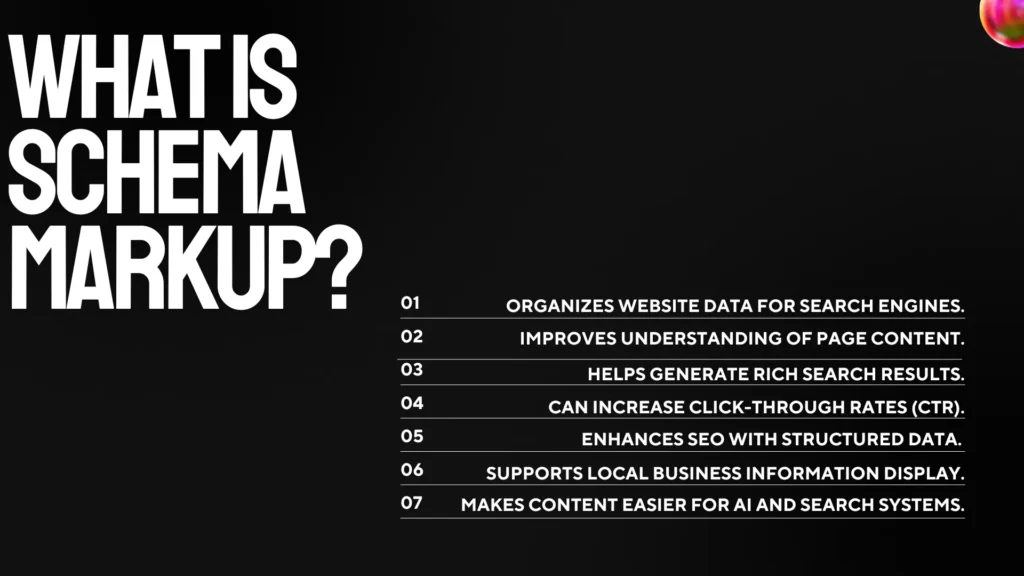
Schema markup is a standardized vocabulary of code — agreed upon by Google, Bing, Yahoo, and Yandex - that you add to your website to describe your content in a way search engines can clearly understand. It was created through Schema.org, a collaborative project designed to give the web a shared language for structured data.
In plain terms: a human reading your page knows that "$49" is a price, that "4.8 stars" is a rating, and that "Tuesday 9 AM–5 PM" is your opening hours. Search engines, however, need that context spelled out. Schema markup is how you spell it out - labeling each piece of information so machines can interpret it accurately and display it richly.
Without schema, search engines guess. With schema, you tell them exactly what your content means. It's a core component of any technical SEO audit, since clean structured data is foundational to how well a site communicates with search engines.
Why Schema Markup Matters for Business Websites?
Helps Search Engines Understand Your Website
Search engines are smart, but they still benefit enormously from clear signals. Schema markup removes ambiguity. Instead of crawling your page and inferring what's a product, a review, or a business address, search engines read your structured data and know for certain. This clarity helps your pages get indexed correctly and matched to the right search queries.
Improves Your Chances of Rich Results
Rich results (also called rich snippets) are the enhanced listings you see in search — star ratings, FAQ dropdowns, product prices, event dates, recipe cook times, and more. These visually richer listings take up more space, attract more attention, and typically earn higher click-through rates than standard results. Schema markup is the prerequisite for almost all of them.
Supports Better Visibility in Search and AI Results
In 2026, search is no longer just ten blue links. AI overviews, answer engines, and voice assistants increasingly pull from structured data to generate responses. Businesses with well-implemented schema are more likely to be cited, summarized, and surfaced in these AI-driven experiences. This is exactly why AI SEO for generative search increasingly relies on structured data as a foundation — making it a key part of staying visible as search evolves.
How Schema Markup Works?
Structured Data and Search Engines
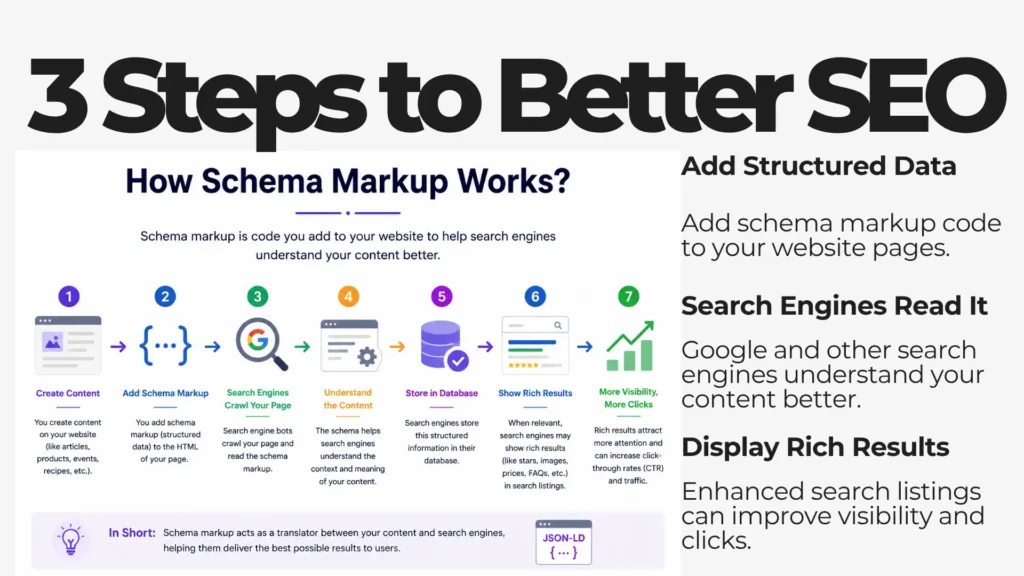
Structured data is information organized in a predictable, machine-readable format. When you add schema to a page, you're essentially attaching labels to your content using the Schema.org vocabulary. Search engine crawlers read these labels, store the structured information, and use it to better understand and display your page.
Schema Markup and Rich Snippets
Once a search engine understands your structured data, it can choose to display your content as a rich snippet. For example, a recipe page with Recipe schema might show a photo, star rating, cook time, and calorie count directly in the search results. A product page with Product and Offer schema can display price and availability. The schema makes the data eligible — though search engines ultimately decide when to show it.
JSON-LD as the Recommended Format
There are three formats for adding schema: JSON-LD, Microdata, and RDFa. Google officially recommends JSON-LD (JavaScript Object Notation for Linked Data) because it's the cleanest and easiest to implement. JSON-LD sits in a single script block in your page's head or body, separate from your visible HTML, which makes it simple to add, edit, and maintain without touching your page's design.
Schema Markup Types by Business Type
Not every business needs every schema type. The smartest approach is to match your structured data to your business model and page types. The table below maps common business types to the schema types that deliver the most value.
Best Schema Types for Different Businesses
| Business Type | Recommended Schema Types |
| Local businesses | LocalBusiness, Organization, Review, Breadcrumb, FAQ |
| Ecommerce stores | Product, Offer, Review, AggregateRating, Breadcrumb |
| Service businesses | Service, LocalBusiness, Review, FAQ, Organization |
| Blogs and publishers | Article, BlogPosting, Person, Breadcrumb, ImageObject |
| SaaS companies | SoftwareApplication, Organization, Review, FAQ, Offer |
| Event companies | Event, Offer, Organization, Place, Breadcrumb |
| Education businesses | Course, Organization, FAQ, Review, Breadcrumb |
| Healthcare businesses | MedicalBusiness, LocalBusiness, Review, FAQ, Person |
| Real estate businesses | RealEstateAgent, LocalBusiness, Review, ImageObject |
| Restaurants | Restaurant, LocalBusiness, Menu, Review, Offer |
💡 Running an online store? Schema is just one piece of the puzzle. See our complete Ecommerce SEO Checklist 2025 for a full breakdown of what it takes to rank and convert.

21+ Important Schema Markup Types You Should Know
1. Organization Schema
Organization schema defines your business as an entity — its name, logo, contact details, social profiles, and more. It's foundational for almost every website because it helps search engines build a clear picture of who you are. It also powers knowledge panels and brand visibility in search.
2. Local Business Schema
A specialized form of Organization schema, LocalBusiness schema includes location-specific details like address, phone number, opening hours, and geo-coordinates. It's essential for any business with a physical location or service area, and it directly supports local pack rankings and Google Maps visibility.
3. Article Schema
Article schema labels news articles, editorial content, and informational pages. It helps search engines understand the headline, author, publish date, and featured image — and can make your content eligible for enhanced placements like Top Stories and rich article cards.
4. Blog Posting Schema
A subtype of Article schema, BlogPosting is tailored specifically for blog content. It signals to search engines that a page is a blog post, with structured details about the author, date, and topic — improving how your blog content is indexed and displayed.
5. Breadcrumb Schema
Breadcrumb schema defines the navigational path to a page (e.g., Home > Services > SEO). In search results, this replaces the long URL with a clean, clickable breadcrumb trail — improving the look of your listing and helping users understand your site structure at a glance.
6. Product Schema
Product schema is the backbone of ecommerce structured data. It describes a product's name, brand, description, images, SKU, and more. Combined with Offer and Review schema, it powers the rich product listings that show price, availability, and ratings directly in search. If you sell on Shopify or WooCommerce, our ecommerce SEO service handles Product schema implementation end to end.
7. Offer Schema
Offer schema specifies pricing and availability details for a product or service — price, currency, stock status, and validity dates. It's what enables search engines to display "$49 — In Stock" beneath your product listing, a powerful driver of qualified clicks.
8. Review Schema
Review schema marks up individual reviews and ratings. When implemented correctly (and paired with AggregateRating for overall scores), it can display those eye-catching star ratings in search results — one of the most click-boosting rich results available.
9. FAQ Schema
FAQ schema structures question-and-answer content on a page. It can display expandable FAQ dropdowns directly in search results, taking up more real estate and answering user questions before they even click. It's especially valuable for service and informational pages.
10. How-To Schema
How-To schema breaks down step-by-step instructions into structured steps, tools, and materials. It can produce rich, illustrated how-to results in search, making it ideal for tutorials, DIY guides, and instructional content.
11. Service Schema
Service schema describes the specific services a business offers — service type, area served, and provider. It's essential for service-based businesses (agencies, contractors, consultants) that want search engines to clearly understand what they do and where.
12. Software Application Schema
SoftwareApplication schema is built for apps and software products. It defines details like the application category, operating system, price, and ratings — helping SaaS companies and app developers earn rich results and stand out in search.
13. Course Schema
Course schema marks up educational courses, including the course name, description, provider, and delivery mode. It helps education businesses and online learning platforms appear in course-specific rich results and carousels.
14. Event Schema
Event schema describes events — name, date, time, location, ticket prices, and availability. It can produce rich event listings in search and Google's event experiences, making it vital for venues, organizers, and ticketing businesses.
15. Job Posting Schema
JobPosting schema structures job listings with details like title, location, salary, and employment type. It makes your openings eligible to appear in Google for Jobs — a major visibility boost for companies that hire regularly.
16. Person Schema
Person schema defines an individual — their name, job title, affiliations, and social profiles. It's useful for author pages, team bios, and personal brands, and supports knowledge panels and author-based search features.
17. Video Schema
VideoObject schema describes video content — title, description, thumbnail, duration, and upload date. It can make your videos eligible for video rich results and video carousels, and improves how your video content is understood and surfaced.
18. Image Object Schema
ImageObject schema provides structured details about images, including captions, licensing, and creator information. It supports image search visibility and helps search engines properly attribute and display your visual content.
19. Recipe Schema
Recipe schema is purpose-built for food content. It marks up ingredients, cook time, nutrition, ratings, and images — powering the rich recipe cards (with photos and star ratings) that dominate food-related searches.
20. Dataset Schema
Dataset schema describes datasets — useful for researchers, governments, and data-driven organizations. It helps datasets become discoverable through Google's Dataset Search, improving visibility for data publishers.
21. Medical Business Schema
MedicalBusiness schema is a specialized type for healthcare providers — clinics, practices, and medical professionals. It structures details like specialties, services, and location, supporting visibility for health-related and local medical searches.
22. Real Estate Agent Schema
RealEstateAgent schema defines real estate professionals and agencies, including service areas, contact details, and listings. It helps real estate businesses stand out in local and property-related searches.
23. Restaurant Schema
Restaurant schema is a specialized LocalBusiness type for dining establishments. It can include cuisine type, menu, opening hours, price range, and reservations — powering the rich restaurant listings that appear in local and food searches.
24. WebPage Schema
WebPage schema is a versatile, foundational type that describes a web page as a whole — its title, description, language, and relationships to other content. It's often used in combination with more specific schema types to provide overarching context.

How to Choose the Right Schema Markup for Your Business?
Match Schema with Your Page Type
The most important rule: schema should reflect what's actually on the page. A product page gets Product schema. A blog post gets BlogPosting. A contact page might use LocalBusiness or Organization. Don't apply schema based on what you wish the page were — apply it based on what it genuinely contains.
Focus on Your Main Business Goal
Prioritize the schema types that drive your core objectives. An ecommerce store should nail Product, Offer, and Review schema first. A service business should focus on Service, LocalBusiness, and FAQ. Start with the schema that moves the needle for your business model, then expand. Browse our full range of SEO services to see how schema fits into a broader strategy for your industry.
Avoid Adding Irrelevant Schema
More schema isn't always better. Adding schema types that don't match your content can confuse search engines and even trigger manual penalties for spammy structured data. Only mark up what's real, relevant, and visible on the page.
Use Multiple Schema Types When Needed
Many pages benefit from layering several schema types. A product page might combine Product, Offer, Review, AggregateRating, and Breadcrumb schema. This is not only allowed — it's encouraged when each type accurately describes part of the page. The key is relevance and accuracy.

Common Schema Markup Mistakes to Avoid
Using the Wrong Schema Type
One of the most frequent errors is choosing a schema type that doesn't fit the content — for example, applying Product schema to a category page, or Article schema to a service page. Always confirm the schema type matches the page's true purpose.
Adding Schema That Does Not Match Page Content
Google requires that structured data reflect content visible to users. Marking up reviews, prices, or FAQs that don't actually appear on the page violates guidelines and can result in penalties or loss of rich results. Schema must always be honest.
Missing Required Properties
Each schema type has required and recommended properties. Skipping required ones means your structured data won't qualify for rich results. For example, Product schema typically needs a name, image, and offer details to be eligible. Always include the mandatory fields.
Not Testing Structured Data
Implementing schema without testing is a recipe for silent failures. Errors and warnings can prevent rich results from ever appearing. Testing should be a standard step in every schema implementation — never assume it works.
Forgetting to Update Old Schema
Schema isn't "set and forget." Prices change, products go out of stock, events pass, and Schema.org vocabulary evolves. Outdated structured data can mislead users and search engines alike. Schedule regular reviews to keep your markup accurate - a task our technical SEO audit team builds into ongoing site maintenance.
How to Test and Monitor Schema Markup?
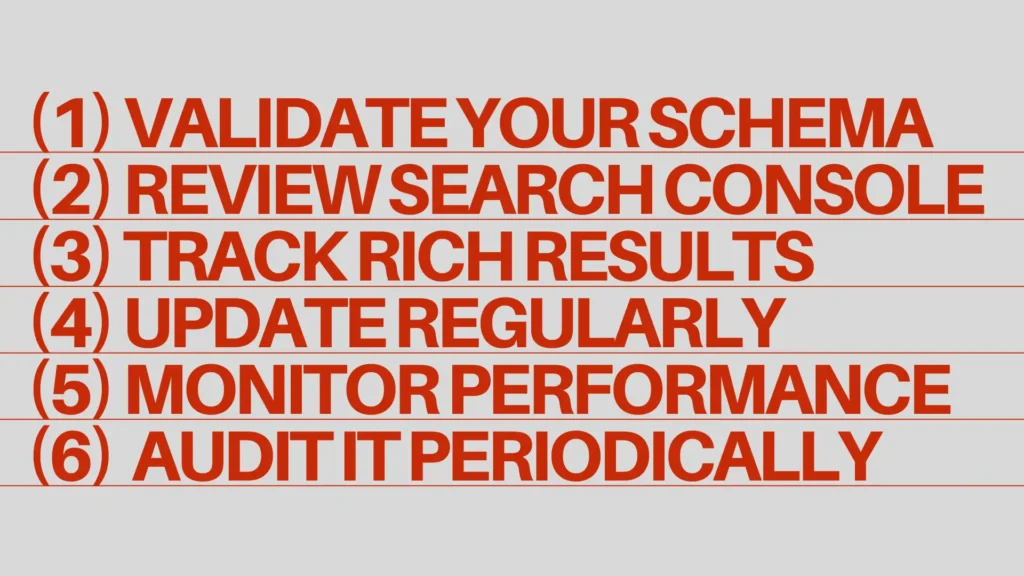
Use Google Rich Results Test
Google's Rich Results Test lets you paste a URL or code snippet and instantly see whether your structured data is valid and which rich results it's eligible for. It's the fastest way to catch errors before they affect your visibility.
Check Structured Data in Search Console
Google Search Console reports on the structured data it finds across your site, grouped by type. It flags errors, warnings, and valid items — giving you an ongoing, site-wide view of your schema health that updates as Google recrawls your pages.
Fix Errors and Warnings Regularly
Errors prevent rich results; warnings indicate missing recommended properties. Make a habit of reviewing these reports and resolving issues promptly. Clearing errors first, then addressing warnings, ensures your pages stay eligible for the richest possible results.
Track Rich Result Performance
Use the Search Console Performance report (filtered by search appearance) to see how your rich results are performing — impressions, clicks, and click-through rates. This data tells you which schema types are actually driving traffic, so you can double down on what works.
Get Schema Markup Support from Dominate SEO
Implementing schema correctly across an entire website — choosing the right types, including required properties, testing, and maintaining it over time — can quickly become complex. That's where expert help pays for itself.
At Dominate SEO, we specialize in technical SEO and structured data implementation that earns real rich results and measurable visibility gains. Whether you run a local business, an ecommerce store, a SaaS platform, or a multi-location service company, our team builds and maintains schema markup tailored to your exact business type and goals.

🎯 Claim Your Free SEO Audit
Want to know exactly which schema types your website is missing — and what it's costing you in lost traffic? Get a free, no-obligation SEO audit and consultation from the Dominate SEO team. We'll review your structured data, identify rich-result opportunities, and show you a clear path to better rankings.
Final Thoughts
Schema markup has quietly become one of the highest-leverage investments in modern SEO. As search shifts toward rich results and AI-generated answers, the businesses that clearly label their content with structured data are the ones that get understood, surfaced, and chosen.
You don't need all 24 schema types — you need the right ones for your business. Start with the foundational types (Organization, LocalBusiness, Breadcrumb), layer in the schema that matches your business model, test everything, and keep it updated. Done well, structured data turns plain listings into standout results that command attention and earn clicks.
And if you'd rather have experts handle it end to end, Dominate SEO is ready to help - get in touch for a free quote.
FAQs
Which schema markup is best for a local business?
LocalBusiness schema is the foundation for any local business, as it structures your name, address, phone number, opening hours, and geo-coordinates. Pair it with Organization, Review, and FAQ schema for the strongest results. Together, these help you appear in local packs, Google Maps, and location-based searches with rich, trust-building details.
Can one page have more than one schema type?
Yes — and it's often recommended. A single product page might combine Product, Offer, Review, AggregateRating, and Breadcrumb schema. The rule is that every schema type you add must accurately describe content that's genuinely on the page. Layering relevant schema types gives search engines a richer, more complete understanding.
Is schema markup important for ecommerce websites?
Absolutely. For ecommerce, Product and Offer schema enable price and availability to show directly in search results, while Review and AggregateRating schema add star ratings. These rich product listings significantly improve visibility and click-through rates, making schema one of the most impactful technical SEO investments for online stores. Learn more in our Ecommerce SEO Checklist 2025.
Does schema markup help with AI search results?
Increasingly, yes. AI overviews, answer engines, and voice assistants rely heavily on structured data to understand and summarize content. Websites with clean, accurate schema are more likely to be cited and surfaced in AI-driven experiences, making structured data an important part of future-proofing your search visibility.
How often should schema markup be updated?
Schema should be reviewed whenever your content changes — updated prices, new products, passed events, or revised business details. Beyond that, a quarterly audit is a good baseline to catch outdated markup and adapt to any changes in Schema.org vocabulary or search engine requirements.
Do small businesses need schema markup?
Yes. Schema markup levels the playing field, helping small businesses compete for rich results and local visibility against larger competitors. Even basic implementation — LocalBusiness, Organization, and Review schema — can meaningfully improve how a small business appears in search and how easily customers find it.
What is the easiest way to add schema markup?
The easiest method is JSON-LD, Google's recommended format, which lives in a single script block separate from your visible content. Many CMS platforms and plugins can generate it automatically. For complex sites or guaranteed accuracy, working with an SEO specialist like Dominate SEO ensures your schema is correct, complete, and properly tested.

A professional journalist, entrepreneur, and marketer deeply passionate about content creation and the art of driving traffic. Every campaign is a story, and every click - a connection.
Dominate SEO | Technical SEO & Structured Data Experts | dominateseo.services