Table of Contents
- Why organic search is the crypto growth channel that still works
- Why crypto SEO is harder than regular SEO
- Keyword strategy: skip the head terms, own the questions
- Content that earns trust (and rankings)
- Technical SEO for crypto and Web3 sites
- Crypto link building: what works and what gets you burned
- Getting found in ChatGPT, Perplexity, Gemini and Claude
- Common crypto SEO mistakes
- Work with an agency that actually takes crypto clients
- FAQ
- Sources
Why organic search is the crypto growth channel that still works
If you run a crypto project, you already know the feeling. You build a solid product, set up a campaign, and the ads get rejected before a single person sees them.
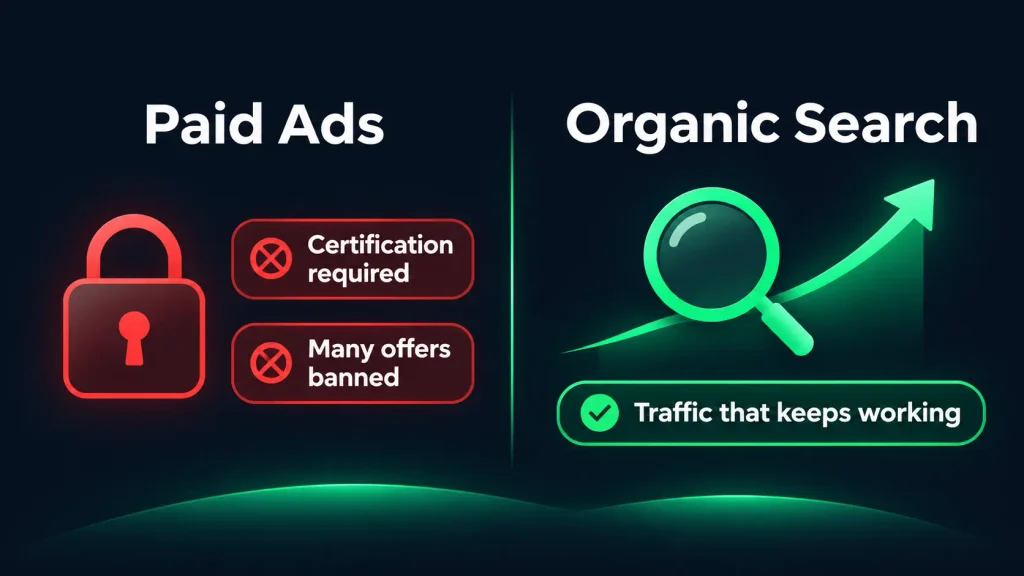
Google loosened its crypto ad rules over the last few years, but only for a narrow group. Exchanges, wallets and coin trusts can advertise after they get certified and meet local licensing rules. Plenty of other crypto offers, like trading signals and crypto comparison sites, are still banned outright. Meta and most other big ad platforms are just as strict.
That leaves one channel nobody can switch off with a policy update: organic search. A page that ranks keeps bringing in traffic month after month, and you don't pay for every click. The catch is that Google holds crypto sites to a higher standard than almost any other niche.
This guide covers what actually moves rankings for crypto websites in 2026, from keyword research and trust signals to link building and visibility in AI tools like ChatGPT and Perplexity.
Why crypto SEO is harder than regular SEO
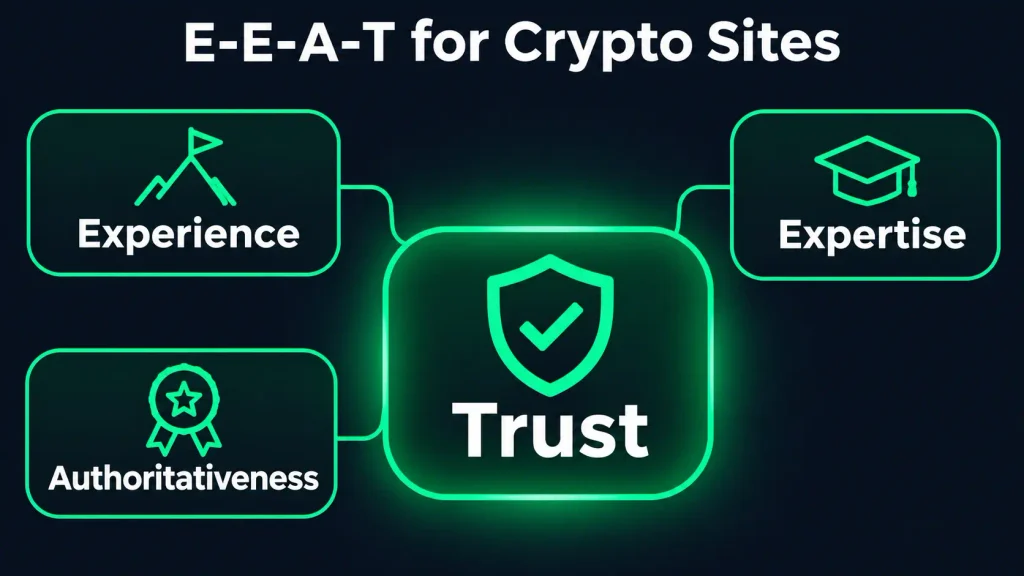
Crypto sits in Google's "Your Money or Your Life" (YMYL) category. Content that can affect someone's finances gets judged much more strictly, so the usual "publish a lot and build some links" playbook doesn't cut it.
Here is what you're up against:
- Trust is the ranking factor. Google's quality raters look for Experience, Expertise, Authoritativeness and Trust (E-E-A-T). An anonymous token site with no team page starts at a disadvantage.
- Scams shaped the algorithm. Years of rug pulls and fake exchanges taught Google to be suspicious of the whole niche. You have to prove you're not one of them.
- The SERPs are crowded with giants. CoinMarketCap, CoinGecko, Investopedia and major exchanges own most head terms like "buy bitcoin" or "best crypto wallet".
- Content goes stale fast. Prices, regulations and protocols change weekly. A guide from last year can quietly fall out of the rankings.
- Link building is a minefield. Crypto is full of paid-post networks and PBNs selling "high DA" links that do more harm than good.
None of this makes ranking impossible. It just means the projects that win are the ones that treat SEO as trust-building, not traffic-hacking.
Keyword strategy: skip the head terms, own the questions
You won't outrank CoinGecko for "bitcoin price" anytime soon, and you don't need to. The traffic that converts in crypto comes from people with a specific problem.
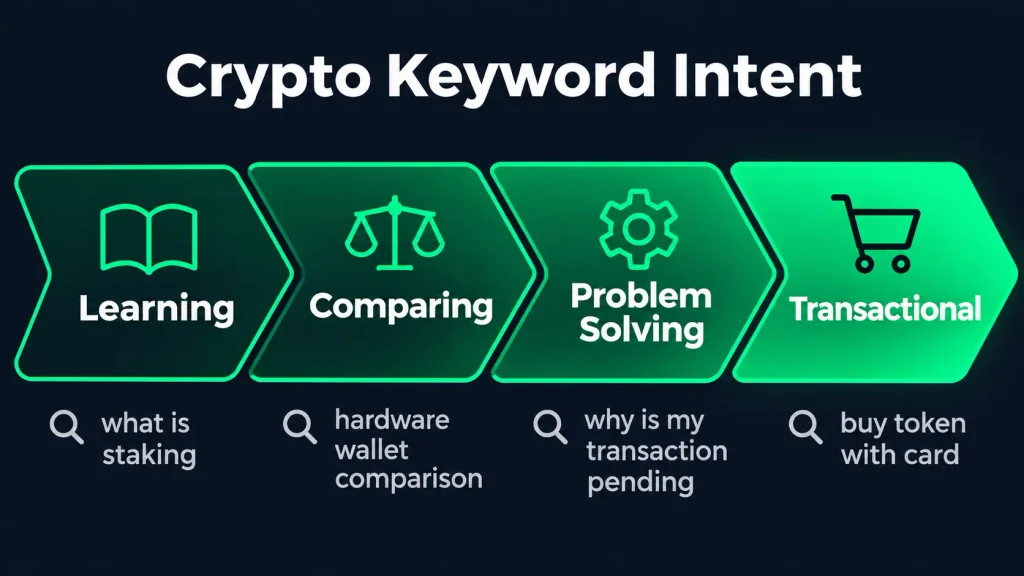
Build your keyword map around four intent groups:
| Intent | Example queries | Content that fits |
|---|---|---|
| Learning | how does staking work, what is a layer 2 | Guides, glossary pages, explainers |
| Comparing | Ledger vs Trezor, best DeFi wallet for beginners | Comparison pages, honest reviews |
| Problem solving | how to move USDT from TRC20 to ERC20, why is my transaction pending | Step-by-step tutorials, troubleshooting |
| Transactional | buy [token] with credit card, [your brand] fees | Product pages, landing pages |
A few tactics that work well in this niche:
- Build a glossary. Dozens of short, well-structured definition pages pick up long-tail traffic and give you natural internal links.
- Go after "how to" problems. People searching for fixes are often stuck mid-transaction and ready to try a new tool.
- Target your own ecosystem. If your project runs on Solana or Base, rank for the questions people ask about that chain.
- Track trending terms weekly. New narratives (restaking, RWAs, AI agents on-chain) open up keywords before the big sites cover them. Being first matters.
Content that earns trust (and rankings)
In crypto, the content that ranks is the content that looks like it was written by someone who would still be around next year. A few things make a real difference:
- Real authors. Put a name, photo and short bio on every article. Link to the author's X or LinkedIn profile and list any relevant experience.
- A visible team. An About page with real people, a company address and contact options. Anonymous teams can rank, but they work twice as hard for it.
- Clear risk disclosures. A short "not financial advice" note and honest risk sections show Google and readers you're not selling hype.
- Original data. On-chain stats, your own fee comparisons, screenshots of real transactions. Anything that can't be copied from another site.
- Update dates that mean something. Refresh key pages when facts change and show the "last updated" date. Don't fake it; Google can tell.
- Third-party proof. Audit reports, press mentions, partnerships and reviews on platforms like Trustpilot all support the trust picture.
Think of every page as an answer to one question from a reader: "Can I trust these people with my money?"
Technical SEO for crypto and Web3 sites
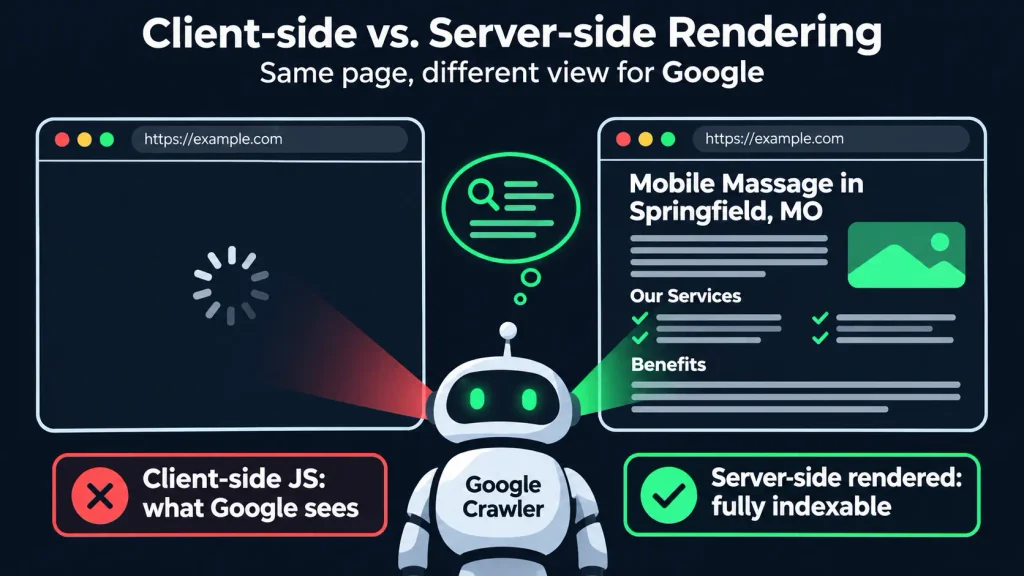
Many crypto sites are built as JavaScript apps first and websites second. That's great for the product and often terrible for search.
The most common technical problems we see:
- Content that only exists in JavaScript. If your pages render client-side, Google may see an empty shell. Use server-side rendering or static generation for every page you want to rank.
- Slow pages from live widgets. Price tickers, charts and wallet-connect scripts add weight. Load them after the main content so Core Web Vitals stay green.
- The app and the marketing site mixed together. Keep dApp pages (swap, dashboard) out of the index and give your blog and landing pages a clean, crawlable structure.
- Thin, auto-generated token pages. Hundreds of near-identical pages for every coin pair can trigger quality issues. Index only the pages that carry unique value.
- Multilingual done badly. Crypto audiences are global. Use proper hreflang tags and real translations, not machine output dropped on a subfolder.
- Missing structured data. Article, FAQ, Organization and Breadcrumb schema help both Google and AI tools understand who you are.
Crypto link building: what works and what gets you burned
Links still matter a lot in crypto, but this is the niche where bad links do the most damage. Plenty of "crypto news" sites exist only to sell posts, and Google knows exactly which ones they are.
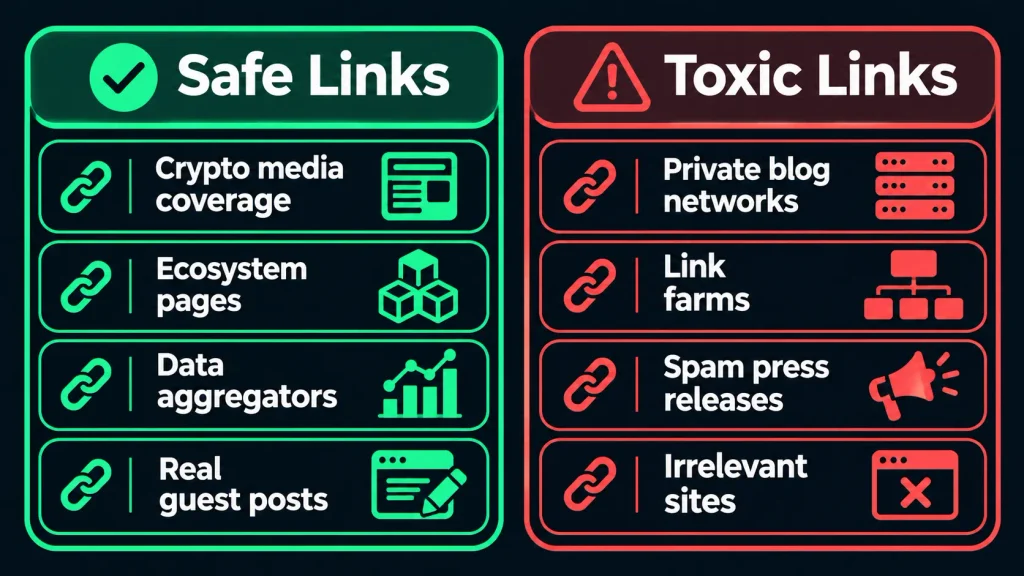
What works:
- Digital PR with real data. Publish a small study (fee trends, wallet adoption, regional usage) and pitch it to crypto media like CoinDesk, The Block or Decrypt.
- Expert quotes. Platforms like Qwoted and Featured.com connect founders with journalists who need a crypto source.
- Ecosystem links. Get listed on your chain's ecosystem page, partner directories, grant pages and integration docs.
- Data aggregators. Accurate profiles on CoinGecko, CoinMarketCap, DefiLlama and similar sites send trust signals and referral traffic.
- Guest content on real publications. One article on a respected site beats twenty on a network nobody reads.
What gets you burned:
- Cheap "guaranteed DA 70" crypto press release packages
- Private blog networks and link farms
- Sudden spikes of exact-match anchor text like "best crypto exchange"
- Links from casino, adult or spam sites that have nothing to do with your project
A healthy crypto link profile grows slowly, comes from sites with real readers, and uses mostly branded anchors.
Getting found in ChatGPT, Perplexity, Gemini and Claude
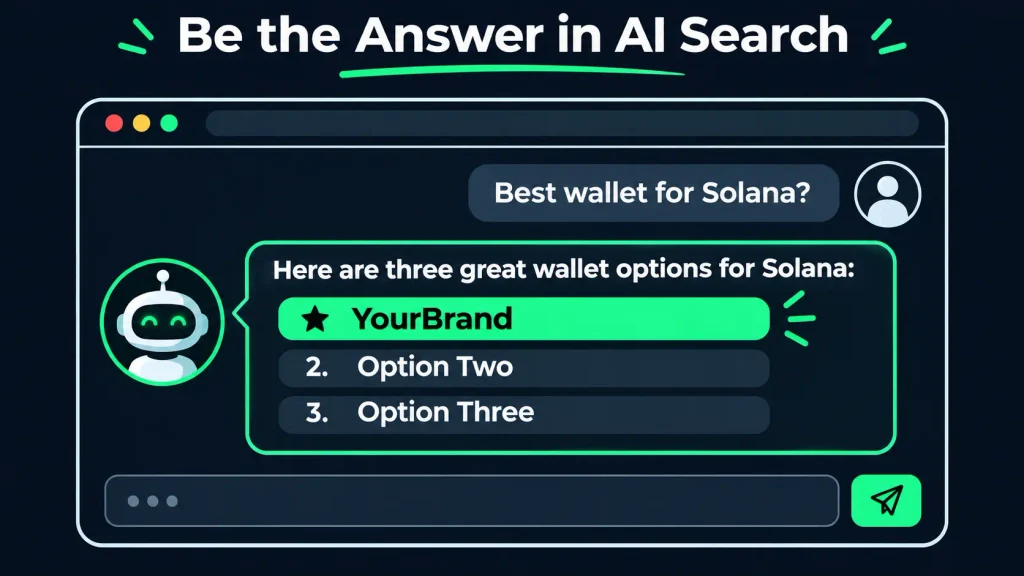
More and more people ask an AI assistant "which wallet should I use for Solana?" instead of typing it into Google. If your project isn't part of those answers, you're missing a growing slice of discovery.
AI tools pull from sources they consider reliable and well-structured. To show up more often:
- Answer questions directly. Start sections with a clear, one or two sentence answer, then go into detail.
- Be consistent everywhere. Your name, description and key facts should match across your site, aggregators, GitHub, X and directories.
- Get mentioned, not just linked. Brand mentions in trusted articles, Reddit threads and comparison posts feed AI answers.
- Keep facts current. AI tools often cite pages with recent dates and specific numbers.
- Check your presence regularly. Ask the main assistants the questions your customers ask and note who gets recommended.
Good traditional SEO is the foundation here. AI visibility is the extra layer on top.
Common crypto SEO mistakes
- Launching the site on token launch day. SEO needs months to build. Start the blog and docs well before you need the traffic.
- Writing only for other crypto natives. Jargon-heavy pages miss the huge audience of beginners searching basic questions.
- Hype-driven copy. Phrases like "100x guaranteed" hurt trust with readers and with Google.
- Buying links in bulk. It works for a few weeks, then it doesn't, and recovery takes far longer than the gain.
- Ignoring the docs. Your developer docs and help center are often your best-ranking pages. Make them indexable and link them from the main site.
- Never updating old content. A 2023 guide with outdated fees and screenshots slowly loses its rankings to fresher pages.
Work with an agency that actually takes crypto clients
Most SEO agencies quietly turn crypto projects away. At DominateSEO, high-risk niches like crypto, gambling, adult and cannabis are our focus, not an exception.
We work on transparent hourly pricing with no long-term retainers, and we optimize for both Google and AI platforms like ChatGPT, Perplexity, Gemini and Claude. If you want a clear plan for growing your crypto project's organic traffic, get in touch for a free consultation.
FAQ
Is SEO worth it for a new crypto project? Yes, if you plan for the long term. Paid channels are restricted for most crypto businesses, and organic rankings keep working after you stop spending.
How long does crypto SEO take to show results? Usually 3 to 6 months for long-tail keywords and 6 to 12 months for competitive terms. New domains take longer.
Can I run Google Ads for my crypto project? Only some categories can, such as certified exchanges, wallets and coin trusts that meet local licensing rules. Many others, including trading signals and crypto comparison sites, are not allowed.
Do crypto press releases help SEO? Rarely on their own. Paid press release networks usually pass little value. Real coverage from respected crypto media is what moves the needle.
Do I need a separate strategy for AI search? You need an extra layer, not a separate strategy. Clear answers, consistent brand info and mentions on trusted sites help both Google and AI assistants.
Sources
- Update to the Google Ads Certification Process (May 2026), Google Ads Help
- Updates to Financial products and services policy (February 2026), Google Ads Help
- Google kills France crypto exchange loophole, mandates MiCA, PPC Land